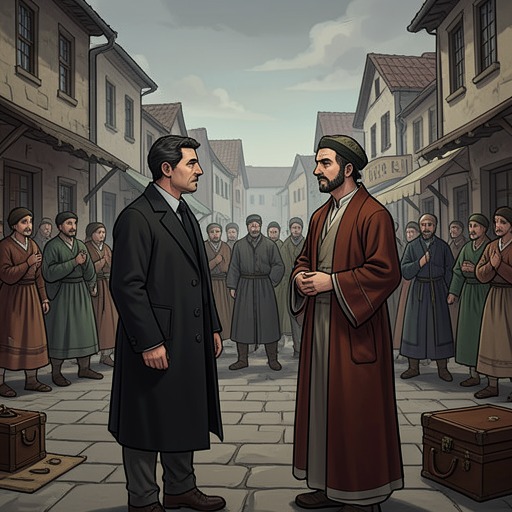
The bamboo must bend to the breeze, but equally the cedar must bend to the typhoon
You Only Live TwiceTiger Tanaka’s image of bamboo yielding to a breeze and cedar yielding to a typhoon gives a concise expression of his view of honor: conduct must respond to circumstance, and duty can outweigh what is said.
Meaning and Context
As Tiger Tanaka takes leave of James Bond, he describes honor as “a pattern of behaviour” and offers the paired images of bamboo bending to a breeze and cedar bending to a typhoon. The contrast suggests that resilience is not simply refusal to yield: different pressures call for different responses. Tanaka makes the point explicit, explaining that “sometimes duty is more compelling than any words.” He then turns from principle to practical arrangements, telling Bond that a car is waiting and asking him to pass on his respects to Dikko, along with a thousand-yen debt for repairs to state-owned electronic equipment.
Departure and Unspoken Urgency
The farewell moves from principle to obligation and then to an unspoken question. Tiger Tanaka stands, offers James Bond his hand, and hopes they will meet again; Bond accepts the “hard dry paw” and thanks him sincerely. After leaving the little secret room, however, Bond’s attention turns to how quickly Dikko’s communications can reach Melbourne and how quickly a message can travel from Melbourne to London. That calculation gives the parting a practical edge: Tanaka’s remarks about duty are followed by Bond considering the speed of the communications chain.
The Maxim’s Balanced Form
The saying balances two unlike pairings—bamboo against a breeze, cedar against a typhoon—in parallel clauses. Its form makes adaptability, rather than steadfastness at any cost, the consistent principle. Tanaka’s explanation supplies the measure for that adaptability: duty determines when words must give way. The image therefore presents flexibility not as indecision, but as conduct governed by obligation.
Public Duty in the Small
The farewell gives Tiger Tanaka’s account of honor a practical counterpart: alongside duty that can outweigh words sits the specific obligation to repay one thousand yen for repairs to electronic equipment belonging to the State. The exact sum and ownership keep the maxim from floating free as abstraction; responsibility is shown both in choices made under pressure and in attention to an ordinary public debt.